Who Is This For?
This article is for anyone pursuing fitness goals who wants to develop the mental skills and habits needed for long-term success. Research consistently shows that evidence-based approaches to fitness yield superior results compared to anecdotal methods.
Who Should Avoid This?
If you are experiencing severe anxiety, depression, or other mental health concerns, please seek support from a qualified mental health professional.
Look around you right now. Whether you're at a coffee shop. An office, or even the gym, chances are you'll see the same thing: heads bent down over smartphones, shoulders rolled forward, and backs hunched over keyboards. This is the posture of the modern world.
Poor posture isn't just about looking confident or standing tall. It is a functional disaster waiting to happen. The human body was designed to move. To hunt, to gather-not to remain locked in a C-shape for 8-10 hours a day. The consequences of this modern lifestyle are widespread: chronic neck pain, tension headaches, reduced lung capacity, nerve impingement. Even impaired digestion.
Fortunately, posture is not permanent. It is a habit. And like any habit. It can be broken and replaced with a better one. In this full guide, we will break down the mechanics of poor posture, explain why it happens. Provide you with actionable, science-based exercises to reverse the damage.
The Anatomy of Bad Posture: Upper Crossed Syndrome
To fix the problem, we must first understand it. The most common postural issue seen today is clinically referred to as "Upper Crossed Syndrome" (UCS). This condition is characterized by a specific pattern of muscle imbalances in the upper body.
Imagine an "X" drawn across your upper body from the side view. One arm of the "X" represents tight. Overactive muscles, while the other represents weak, inhibited muscles.
Focus on keeping perfect form and core bracing throughout the exercise.
1. The Tight Muscles (Need Stretching)
- Pectoralis Major/Minor:Spending hours with arms in front of us (typing. Driving) causes the chest muscles to shorten, pulling the shoulders forward.
- Upper Trapezius & Levator Scapulae:Stress and hunching cause us to involuntarily shrug our shoulders. Chronic tightness in the neck and upper back.
- Sternocleidomastoid (SCM):The large muscles at the front of the neck become short. Tight from looking down at screens ("Tech Neck").
Focus on keeping perfect form and core bracing throughout the exercise.
2. The Weak Muscles (Need Strengthening)
- Deep Neck Flexors: These small muscles on the front of the cervical spine are responsible for keeping the head aligned. When they are weak, the chin juts forward.
- Rhomboids & Middle/Lower Traps:These are the primary scapular retractors. When they are weak. They cannot hold the shoulder blades back against the pull of the tight chest muscles.
- Serratus Anterior: The muscle responsible for proper shoulder blade movement often becomes dormant.
The Result:Forward head posture, rounded shoulders, and a hunched thoracic spine (kyphosis). This alignment puts massive stress on the cervical spine. For every inch your head moves forward. The perceptible weight of your head on your neck increases by roughly 10 pounds!
Target your spine. Core with deep mobility movements that improve posture and reduce lower back tension.
Correcting the Issue: The 3-Step Protocol
You cannot simply "sit up straight" to fix years of adaptation. You need a clear approach. We use a simple 3-step plan:Release, Mobilize, Strengthen.
Step 1: Release (SMR - Self-Myofascial Release)
Before stretching, we need to address the tissue quality. Using a foam roller or lacrosse ball can help break up adhesions in the fascia.
Pec Smash:Take a lacrosse ball (or tennis ball). Place it between your chest and a wall. Lean into it. Finding tender spots in the pec minor (near the armpit). Roll over these spots for 60-90 seconds per side.
Upper Trap Release:Place a ball against a wall. Lean your upper back (not your spine/neck) into it. Move the ball around the meaty part of your upper traps. When you find a trigger point, pin it down and slowly move your arm up. Down.
Step 2: Mobilize (Dynamic Stretching)
Now that the tissues are pliable. We need to restore range of motion to the joints. For a deeper guide on flexibility and mobility, explore our flexibility series. Specific mobility drills can also help with movement quality.
Doorway Chest Stretch:
Stand in a doorway with your forearms on the frame at a 90-degree angle. Step through gently
until you feel a deep stretch in your chest. Hold for 30-45 seconds. Caution: Do not let your
head jut forward.
Thoracic Extensions (Foam Roller):
Lie with your upper back across a foam roller. Support your head with your hands. Gently
extend your spine backward over the roller. Do not crunch your low back; focus on moving the
upper back.
Wall Angels:
Stand with your back flat against a wall. Tuck your chin. Place your elbows and wrists
against the wall in a "W" position. Slide your arms up as high as you can without losing contact
with the wall or arching your back. This is harder than it looks!
Step 3: Strengthen (Activation)
This is the most critical step. If you do not strengthen the weak muscles. The tight ones will simply pull you back into poor posture within an hour.
1. Face PullsAttaching a rope to a cable machine at face height. Pull the rope towards your face, separating your hands. Externally rotate your shoulders at the end. This targets the rear delts, rhomboids. External rotators-the exact opposite of the "slouching" muscles.
2. Band Pull-ApartsHold a resistance band with hands shoulder-width apart. Keep your elbows straight but not locked. Pull the band apart until it touches your chest. Squeezing your shoulder blades together. Do 3 sets of 20 reps daily.
3. Chin Tucks
Ideally done against a wall. Pull your head straight back (making a "double chin") as if
trying to touch the back of your neck to the wall. Hold for 5 seconds. This activates the deep
neck flexors.
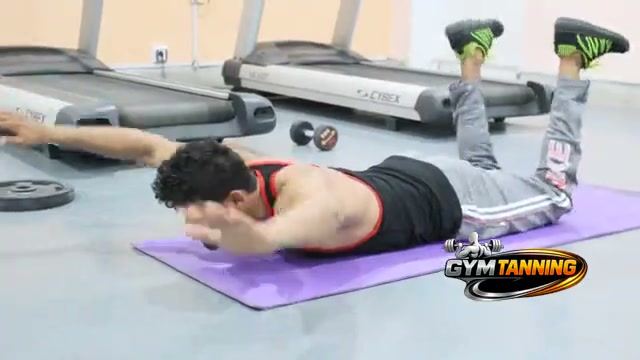
4. Prone Y-T-W RaisesLie face down on the floor. Raise your arms into a "Y" shape (thumbs up). Then a "T" shape, then a "W" shape. Squeeze your back muscles at the top of each rep. This hits the lower traps specifically.
Daily Habits to reinforce Good Posture
You exercise for maybe 1 hour a day. You have bad posture for the other 15. The math doesn't work in your favor unless you change your daily habits.
1. The "Text Neck" Fix
Stop looking down at your phone. Bring the phone up to eye level. It looks silly, but your neck will thank you. If your arms get tired, support your elbows against your ribs.
2. Ergonomic Workstation
- Monitor Height: The top third of your screen should be at eye level.
- Keyboard/Mouse:Should be positioned. Your elbows are at 90 degrees and wrists are neutral.
- Chair: Should support your lumbar spine. Your feet should be flat on the floor.
3. The 30-Minute Rule
Set a timer. Every 30 minutes, stand up. Do 10 band pull-aparts or just stretch your arms overhead. Motion is lotion.
Use our Workout Planner to apply these principles, and pair with the Diet Planner and Calorie Calculator for a complete approach.>The "Posture Fix" Routine
Perform this routine 3-4 times per week. Or even daily as a desk-break.
Routine Breakdown
-
Pec Smash (Lacrosse Ball)
1 min per side. -
Thoracic Extensions
10 slow reps over foam roller. -
Doorway Stretch
2 sets of 45 seconds. -
Wall Angels
2 sets of 10 slow reps. -
Band Pull-Aparts
3 sets of 20 reps. -
Chin Tucks
2 sets of 10 reps (5-second hold).
Conclusion
Good posture is about more than avoiding pain; it's about projecting confidence, breathing better. Moving efficiently. It signals to the world (and to your own brain) that you are capable. Alert. Incorporating yoga for weightlifters into your routine can further enhance posture and body awareness.
Fixing years of poor posture takes time and routine. You won't see changes overnight. But if you commit to these small daily habits and corrective exercises, you will stand taller, look leaner. Feel stronger.