Who Is This For?
This guide is for anyone looking to optimize their diet for better performance, body composition, and overall health. Research consistently shows that evidence-based approaches to fitness yield superior results compared to anecdotal methods.
Who Should Avoid This?
If you have a diagnosed medical condition such as diabetes, kidney disease, or an eating disorder, consult your healthcare provider before making significant dietary changes.
You can train six days a week, crush every PR. Run until your lungs burn. But if you ignore your nutrition, you will never see the physique you are working. Hard for. The old adage is true: "Abs are made in the kitchen."
Enter Flexible Dieting, also known as "If It Fits Your Macros" (IIFYM). It is not a restrictive meal plan that forces you to eat boiled chicken. Broccoli five times a day. It is a mathematical approach to nutrition that gives you freedom. As long as you hit your daily targets for Protein, Carbohydrates. Fats, you can eat anything. Yes, even pizza. (In moderation, of course).
In this guide, we will demystify the numbers. Give you a step-by-step blueprint to calculating and tracking your macros for maximum results.
Use our Workout Planner to apply these principles, and pair with the Diet Planner and Calorie Calculator for a complete approach.>The Big Three Macronutrients
Everything you eat is made up of these three compounds. They provide calories. They each have a specific job in the body.
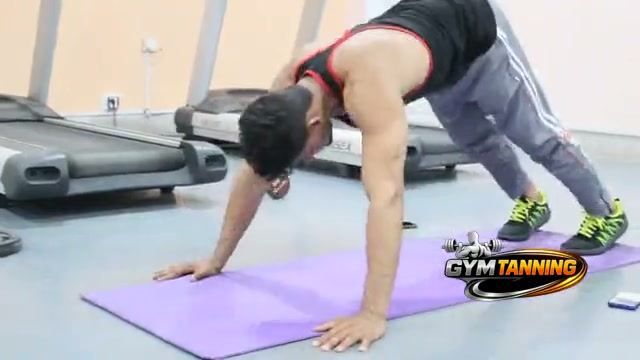
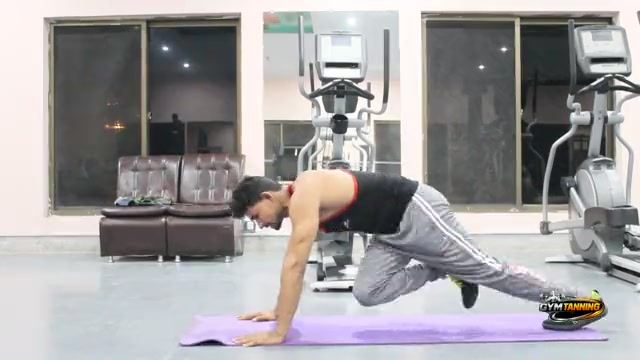
Focus on keeping perfect form and core bracing throughout the exercise.
1. Protein (4 Calories per gram)
The building block of muscle tissue. Without adequate protein, you cannot recover from workouts or build mass. It is also the most satiating macro. You full longer.Sources:Chicken, Beef, Fish, Eggs, Whey, Tofu, Greek Yogurt.
Core tight. Don't hyperextend back.
2. Carbohydrates (4 Calories per gram)
The body's preferred energy source. Carbs are stored as glycogen in the muscles. Liver to fuel intense activity. They are protein-sparing. Meaning they avoid your body from breaking down muscle for energy.Sources:Rice, Potatoes, Oats, Fruit, Bread, Vegetables.
Feet elevated for difficulty.
3. Fats (9 Calories per gram)
Essential for hormone production (testosterone, estrogen), brain function, and joint health. Fats are calorie-dense. A little goes a long way.Sources:Avocado, Nuts, Olive Oil, Salmon, Egg Yolks, Cheese.
Step 1: Calculate Your BMR (Basal Metabolic Rate)
Your BMR is the number of calories you burn just by existing-sleeping. Breathing, blinking. It accounts for about 60-70% of your total energy burn.
A simple formula (Mifflin-St Jeor): is complicated. Let's keep it simple:
- Men: Bodyweight (lbs) x 10 or 11
- Women: Bodyweight (lbs) x 9 or 10
Step 2: Calculate TDEE (Total Daily Energy Expenditure)
Take your BMR. Multiply it by an activity factor to find your normal levels calories (the amount needed to stay the same weight).
- Sedentary (Desk Job): BMR x 1.2
- Light Activity (Exercise 1-3 days): BMR x 1.375
- Moderate Activity (Exercise 3-5 days): BMR x 1.55
- Heavy Activity (Exercise 6-7 days): BMR x 1.725
Step 3: Set Your Goal
Now, adjust your TDEE based on what you want to achieve.
- Fat Loss (Cutting): Subtract 500 calories (approx. 1lb fat loss per week). For a deeper dive into calorie deficit and energy balance, check out the full guide.
- Muscle Gain (Bulking): Add 250-500 calories.
- Maintenance (Recomp): Stay at TDEE.
Step 4: Allocate Macros
This is where the magic happens. We prioritize Protein, then Fat, then fill the rest with Carbs.
Rule 1: Set Protein
Aim for 0.8 to 1 gram of protein per pound of bodyweight.
Example: A 200lb man needs ~200g Protein.
200g x 4 cal/g = 800 Calories from Protein.
Rule 2: Set Fat
Aim for 0.3 to 0.4 grams of fat per pound of bodyweight.
Example: 200lb man x 0.3 = 60g Fat.
60g x 9 cal/g = 540 Calories from Fat.
Rule 3: Fill with Carbs
Take your remaining calorie budget. Divide by 4.Example Goal:2500 Calories.Used so far: 800 (Protein) + 540 (Fat) = 1340 Calories.Remaining: 2500 - 1340 = 1160 Calories.1160 / 4 cal/g = 290g Carbs.
Final Macros: 200g Protein, 60g Fat, 290g Carbs.
Tracking: The Tools of the Trade
You can't manage what you don't measure. You need two things:
- A Digital Food Scale: Do not eyeball it. What you think is 1 tablespoon of peanut butter is probably 3. Weigh everything in grams.
- A Tracking App: MyFitnessPal, Cronometer, or MacroFactor. Scan barcodes and log rigorously.
Common Pitfalls
1. Using Generic Entries:Don't search for "Medium Apple." Weigh it. A generic entry might be 80 calories. Your massive Honeycrisp is 150.
2. Ignoring Liquid Calories: That Starbucks latte has more calories than a burger. Track everything that passes your lips.
3. Eating Back Exercise Calories: Most trackers overestimate calories burned. Do not eat back what your Fitbit says you burned. Stick to your TDEE calculation.
Micro-Nutrients (The "If It Fits Your Micros")
Just because youcanhit your carbs with gummy bears doesn't mean youshould. Micros (vitamins and minerals) matter for health. If you prefer structured eating patterns like intermittent fasting, that approach can complement flexible dieting too. Follow the 80/20 rule: 80% whole, unprocessed foods, 20% fun foods.
Conclusion
Macro counting gives you control. Pair it with our pre and post workout nutrition guide to optimize your performance around training. It liberates you from the anxiety of "good" vs "bad" foods. It turns nutrition into a science experiment where you are the subject. Track, adjust, and watch your body change.