Who Is This For?
This article is for anyone pursuing fitness goals who wants to develop the mental skills and habits needed for long-term success. Research consistently shows that evidence-based approaches to fitness yield superior results compared to anecdotal methods.
Who Should Avoid This?
If you are experiencing severe anxiety, depression, or other mental health concerns, please seek support from a qualified mental health professional.
You can have the best workout program in the world. You can have the cleanest diet plan, the clearest schedule. The most expensive gym membership. But if your mind is not in the right place. You will fail. It is harsh, but it is true.
Fitness is 20% physical and 80% mental. The body follows where the mind leads. If you cannot conquer the voice in your head that says "sleep in. " "skip the last set," or "eat the donut," you will never reach your full potential.
In this guide, we are going to explore the psychology of fitness. We will dismantle the myth of motivation. Build a framework for unbreakable discipline.
Use our Workout Planner to apply these principles, and pair with the Diet Planner and Calorie Calculator for a complete approach.>The Myth of Motivation
Most beginners wait for motivation to strike. They watch a motivational video, feel a surge of energy. Go to the gym. But what happens three weeks later when it's raining, you're tired,. The motivation is gone?
Motivation is a feeling. Discipline is a skill.
Motivation is unreliable. It comes and goes like the weather. Discipline is doing what needs to be done. Regardless of how you feel. Elite athletes don't train because they are always motivated. They train because it's who they are.
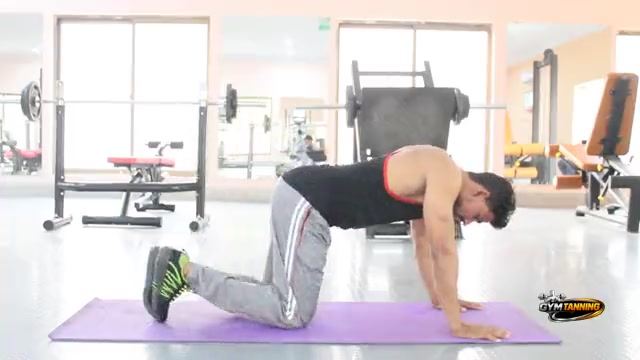
Activate muscles before lifting.
Finding Your "Why" (Intrinsic vs. Extrinsic)
Why are you doing this? Be honest.
- Extrinsic Motivation: "I want to look good for my wedding." "I want to impress my ex." These are weak. Once the event passes, the motivation dies.
- Intrinsic Motivation:"I want to see what my body is capable of." "I want to live a long. Healthy life for my kids." "I love the feeling of strength." This is rocket fuel. It lasts forever.
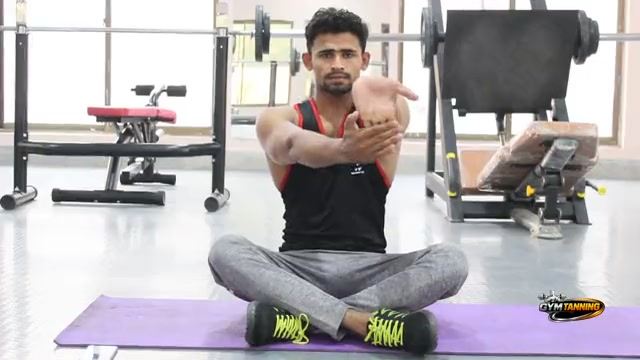
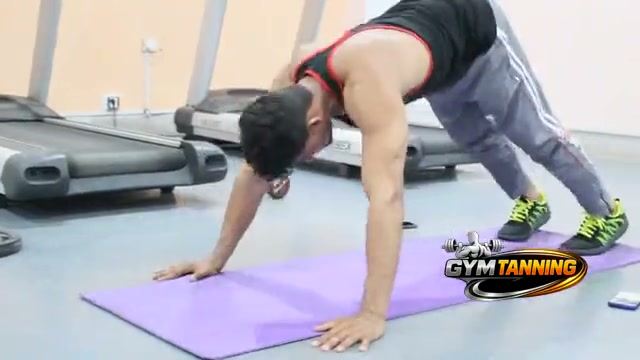
Full body warmup before workout.
The Psychology of Goal Setting
A goal without a plan is just a wish. Use the S.M.A.R.T. framework:
- Specific: Don't say "I want to get fit." Say "I want to lose 10lbs of fat."
- Measurable: Can you track it? (Scale weight, body fat %, bench press max).
- Achievable: Is it realistic? Losing 20lbs in a week is not.
- Relevant: Does it matter to you?
- Time-bound: "By June 1st." Deadlines create urgency.
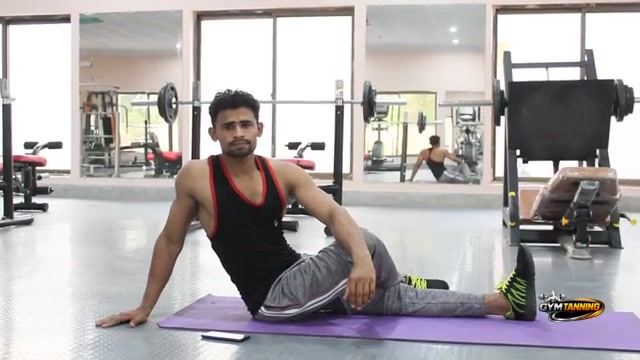
Stretch your abdominals. Lower back to improve posture and reduce stiffness through targeted core flexibility work.
Building Habits: The Loop
James Clear. Author ofAtomic Habits, describes the habit loop: Cue, Craving, Response, Reward.
Example:Cue:Set your gym clothes out the night before.Craving:Anticipate the post-workout endorphin rush.Response:Go to the gym immediately after waking up.Reward:A delicious protein smoothie. A sense of accomplishment.
After 66 days (on average), this becomes automatic. You won't need willpower anymore. It will just be what you do.
Overcoming Gym Intimidation
Everyone starts as a beginner. That massive guy benching 315lbs? He started with the empty bar. No one is looking at you. They are too busy looking at themselves in the mirror. Put your headphones on, focus on your plan, and respect the process.
The Growth Mindset
Carol Dweck's concept of "Growth Mindset" is crucial.
Fixed Mindset: "I have bad genetics. I can't build muscle."
Growth Mindset: "I haven't figured out how to build muscle yet. I
need to adjust my training and nutrition."
Failure is not final. It is feedback. Every missed lift is a lesson. Every cheat meal is data. Learn and move forward.
Conclusion
The iron never lies to you. You can't cheat it. 200lbs is always 200lbs. The gym is the ultimate training ground not just for your muscles. For your mind. If you can discipline yourself to push through the pain of a squat set. You can push through anything life throws at you.