Who Is This For?
This guide is for lifters of all levels who want to improve their exercise technique, build functional strength, and optimize their training results. Research consistently shows that evidence-based approaches to fitness yield superior results compared to anecdotal methods.
Who Should Avoid This?
Consult a healthcare professional before starting this program if you have existing joint or musculoskeletal injuries, or if you are recovering from surgery.
The squat is the king of exercises. For many, it is also the king of pain. Lower back aches, knee clicking. The inability to hit depth without falling backward are all common complaints. The culprit? It is rarely a lack of strength. It is almost always a lack ofmobility.
Mobility is not flexibility. Flexibility is the ability of a muscle to lengthen passively (like touching your toes). Mobility is the ability to control a joint through its full range of motion actively. To squat deep with a loaded barbell, you need mobility in three key areas: the ankles, the hips. The thoracic spine.
In this guide, we will break down the "Big Three" mobility blockers. Give you a specific toolkit of drills to fix them.
Use our Workout Planner to apply these principles, and pair with the Diet Planner and Calorie Calculator for a complete approach.>1. Ankle Mobility (The Foundation)
If your ankles are locked up, your knees cannot travel forward. If your knees cannot travel forward. Your hips have to shoot back to keep balance. This torques your lower back and avoids you from hitting depth.
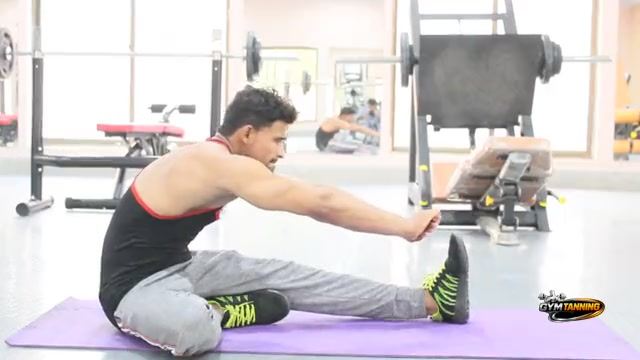
Open up tight hips. Improve ankle flexibility - key for squats, deadlifts and athletic performance.
The Test: Knee-to-Wall
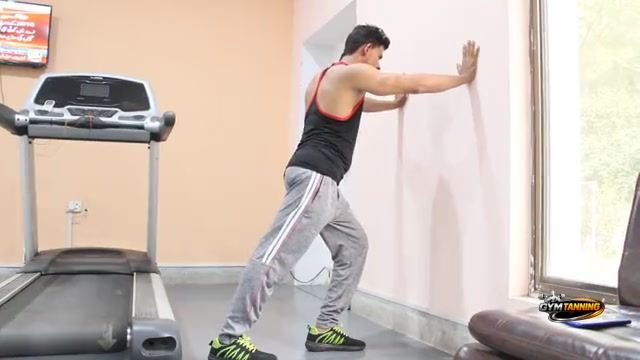
Stand facing a wall with your big toe 5 inches away. Try to touch your knee to the wall without your heel lifting off the ground. Can't do it? You have restricted ankle dorsiflexion.
Open up tight hips. Improve ankle flexibility - key for squats, deadlifts and athletic performance.
The Fix: Banded Ankle Distraction
Attach a heavy resistance band to a rack. Loop it around the front of your ankle (right at the talus bone). Step forward to create tension. Drive your knee forward over your toe while keeping your heel down. The band pulls the bone back. Creating space in the joint capsule.Prescription:2 minutes per side before every leg day.
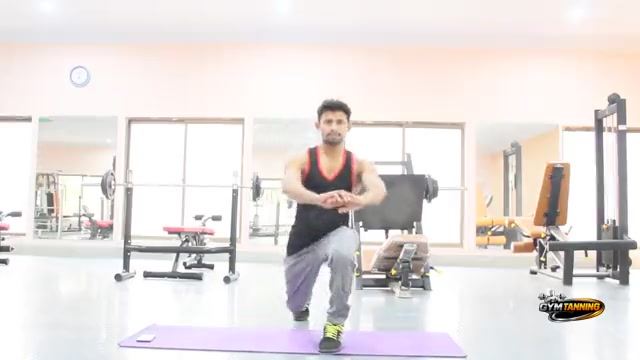
Hip and ankle mobility for squats.
2. Hip Mobility (The Hinge)
Tight hips cause "butt wink" (rounding of the lumbar spine at the bottom of the squat). Knee cave (valgus collapse). You need both internal and external rotation.
The Fix: The 90/90 Drill
Sit on the floor with one leg in front of you bent at 90 degrees. The other leg behind you bent at 90 degrees.1. Lean forward over your front leg to stretch the glute (External Rotation).2. Lean back toward your rear leg to stretch the hip flexor (Internal Rotation).Prescription:10 reps per side. Holding for 5 seconds.
The Fix: The Pigeon Pose
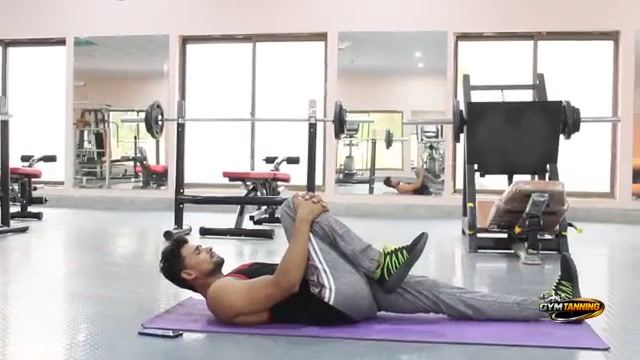
A classic yoga move that destroys glute stiffness. Bring one leg forward, shin parallel to your body. Sink your hips down. It opens up the posterior chain like nothing else.
3. Thoracic Spine (The Upright Torso)
If your upper back (T-spine) is rounded from sitting at a desk all day. You will collapse forward in the squat. This is a common posture issue that can be addressed with targeted exercises. This puts massive shear force on your lower back. You need to be able to extend your T-spine to keep your chest up.
The Fix: Foam Roller Extensions
Lie with your upper back on a foam roller. Keep your butt on the floor and your hands behind your head. "wrap" your upper back around the roller. Do not arch your lower back.Prescription:10-15 extensions, moving the roller up. Down your upper back.
The Ultimate Pre-Squat Warm-Up
Don't just walk on the treadmill for 5 minutes. Perform this dynamic sequence to build your joints. For a complete leg day program, see our leg day masterclass.
- Cat-Cow: 10 reps to mobilize the spine.
- Bird-Dog: 10 reps to activate the core.
- World's Greatest Stretch: 5 reps per side to hit hips and T-spine.
- Bodyweight Kang Squats: 10 reps to pattern the hinge and squat.
- Empty Bar Squats:2 sets of 10. Pausing at the bottom for 3 seconds.
Squat Shoes: A Cheatsheet?
If you have poor ankle mobility. Weightlifting shoes (lifters) with a raised heel are a game changer. They artificially increase your dorsiflexion. You to squat deeper with a more upright torso. They are not a "cheat"-they are a tool used by every Olympic lifter in the world.
Conclusion
Mobility work is not sexy. It doesn't get you likes on Instagram. But it is the difference between squatting 315lbs pain-free for years. Blowing out a disc at 25. Invest 10 minutes before every workout. Your future self will thank you.