Who Is This For?
This guide is for lifters of all levels who want to improve their exercise technique, build functional strength, and optimize their training results. Research consistently shows that evidence-based approaches to fitness yield superior results compared to anecdotal methods.
Who Should Avoid This?
Consult a healthcare professional before starting this program if you have existing joint or musculoskeletal injuries, or if you are recovering from surgery.
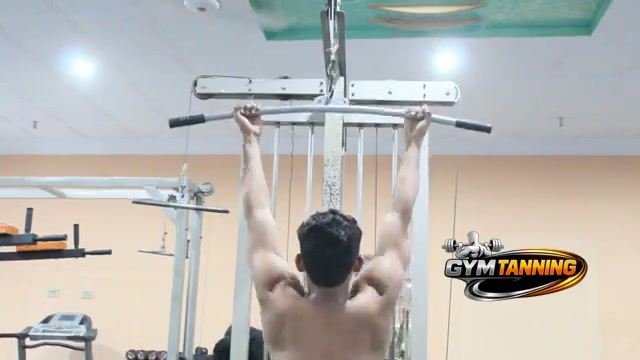
Unless you can rep out sets of 15 strict pull-ups. The lat pulldown is your best friend. It is the primary vertical pulling movement for building a wide, sweeping back—the coveted "V-taper.".
But walk into any gym, and you will see it being butchered. Swinging torsos, half-reps, and ego lifting are the norm. The result? Small backs and injured shoulders.
In this guide. We are going deep into the biomechanics of the lat pulldown. You will learn exactly how to grip the bar, how to sit. How to execute the movement to isolate the Latissimus Dorsi like never before.
The Anatomy of the Lats
The Latissimus Dorsi is the largest muscle in the upper body. Its fibers fan out from your spine and armpit. Its primary function is to pull the upper arm down (adduction). Back (extension).
When well-developed. The lats create the illusion of a smaller waist, enhancing your overall aesthetic.
Drive elbows down. Wide grip.
Step 1: The Setup (Don't Skip This)
Most machines are adjustable. If you just jump in, you're setting yourself up for failure.
Full ROM. Chin over bar. Dead hang.
1. Thigh Pad Height
Adjust the thigh pad so it locks your legs down firmly. Your feet should be flat on the floor,. Your knees at a 90-degree angle. If there's space between your thighs. The pad, the weight will pull you out of the seat.
Focus on keeping perfect form and core bracing throughout the exercise.
2. The Grip
Option A: Wide Overhand Grip (Pronated)Focus:Upper Lats. Teres Major (Width).Width:Just outside shoulder width. Going too wide reduces range of motion. Puts stress on the rotator cuff.
Option B: Close Underhand Grip (Supinated)
Focus: Lower Lats and Biceps (Thickness).
Width: Shoulder width.
Recommendation:Use a medium-wide overhand grip (1.5x shoulder width) for the best balance of width. Strength.
Use our Workout Planner to apply these principles, and pair with the Diet Planner and Calorie Calculator for a complete approach.>Step 2: The Execution
This is where the mind-muscle connection is critical.
1. The Start
Start with your arms fully extended. Let your lats stretch up. Do not shrug your shoulders into your ears excessively. Allow a good stretch.
2. The Pull
Initiate the movement by depressing your scapula (pulling your shoulder blades down). Then, drive
your elbows down towards your hips.
Mental Cue: Ignore your hands. Pretend they are just hooks. Pull with your elbows.
3. Torso Angle
Lean back slightly-about 10 to 15 degrees. This allows the bar to clear your face. Aligns your lats with the cable.Warning:Do not turn it into a row. If you are leaning back 45 degrees and swinging to get the weight down, you are using momentum. Your lower back, not your lats.
4. The Squeeze
Pull the bar down to your upper chest (clavicle level). Squeeze your shoulder blades together hard. Pause for 1 second.
5. The Eccentric (Negative)
Control the weight on the way up. Take 3 seconds. Fight the resistance. This is where the muscle damage (and growth) occurs.
Common Mistakes to Avoid
1. Pulling Behind the Head:This is an old-school bodybuilding technique that is dangerous for the rotator cuff. Neck. It offers no advantage over pulling to the front. Stop doing it.
2. Using Too Much Bicep:If your forearms are on fire but your back feels nothing. You are pulling with your arms. Use a "thumbless grip" (hooks) to disengage the biceps.
3. Momentum:If you have to jerk the weight to start it. It is too heavy. Drop the ego, drop the weight.
Variations for Complete Back Development
Once you master the standard pulldown, try these advanced back development variations.
1. Neutral Grip Pulldown (V-Bar)
Palms facing each other. This is easier on the shoulders and allows for a huge stretch. It targets the lower lats and improves thickness.
2. Straight-Arm Pulldown
An isolation exercise that takes the biceps completely out of the equation. Use this as a finisher to burn out the lats.
3. Single-Arm Pulldown
Great for fixing muscle imbalances. It allows you to focus 100% on one side at a time. Get a deeper contraction.
Conclusion
The lat pulldown is not just a stepping stone to the pull-up; it is a primary mass builder in its own right. Treat it with respect. Master the form, control the weight. Visualize your back growing with every rep. A wide back is the hallmark of a serious lifter. Go build yours.